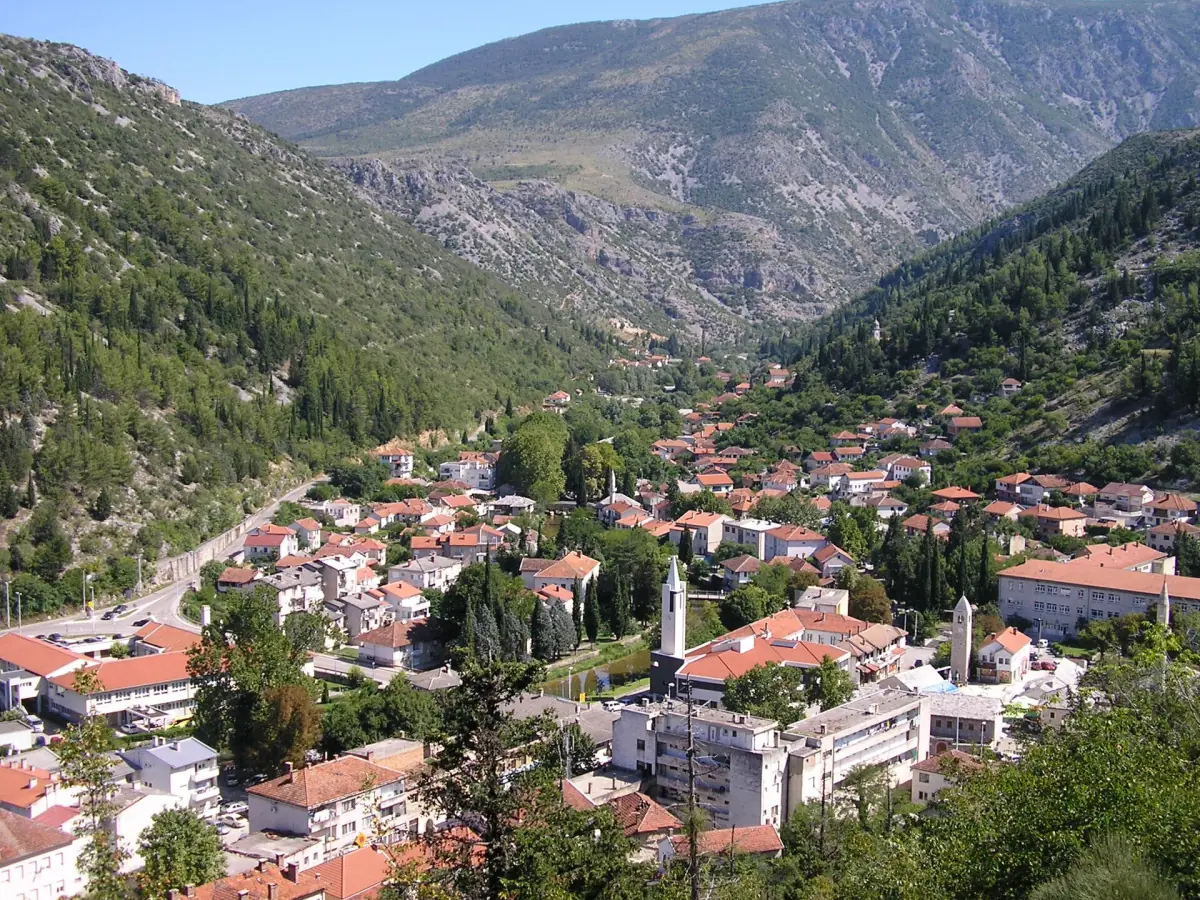
Stolac and Radimlja at a glance
The Bregava river flows through Stolac, and the fortress Vidoški grad stands above the town. The canton's tourism organization describes stone houses and bridges in the town. Radimlja, the other reason to come, holds medieval grave markers called stećci.
This is an independent guide. It is not run by the town, the Radimlja institution or a tour company. Where hours and prices are not listed here, ask on site.
What to see in Stolac
A quiet stop with the river, a fortress and the necropolis.
The Bregava
The river runs through the town, and the stone houses and bridges sit along it. A walk by the water is the simplest way to see Stolac.
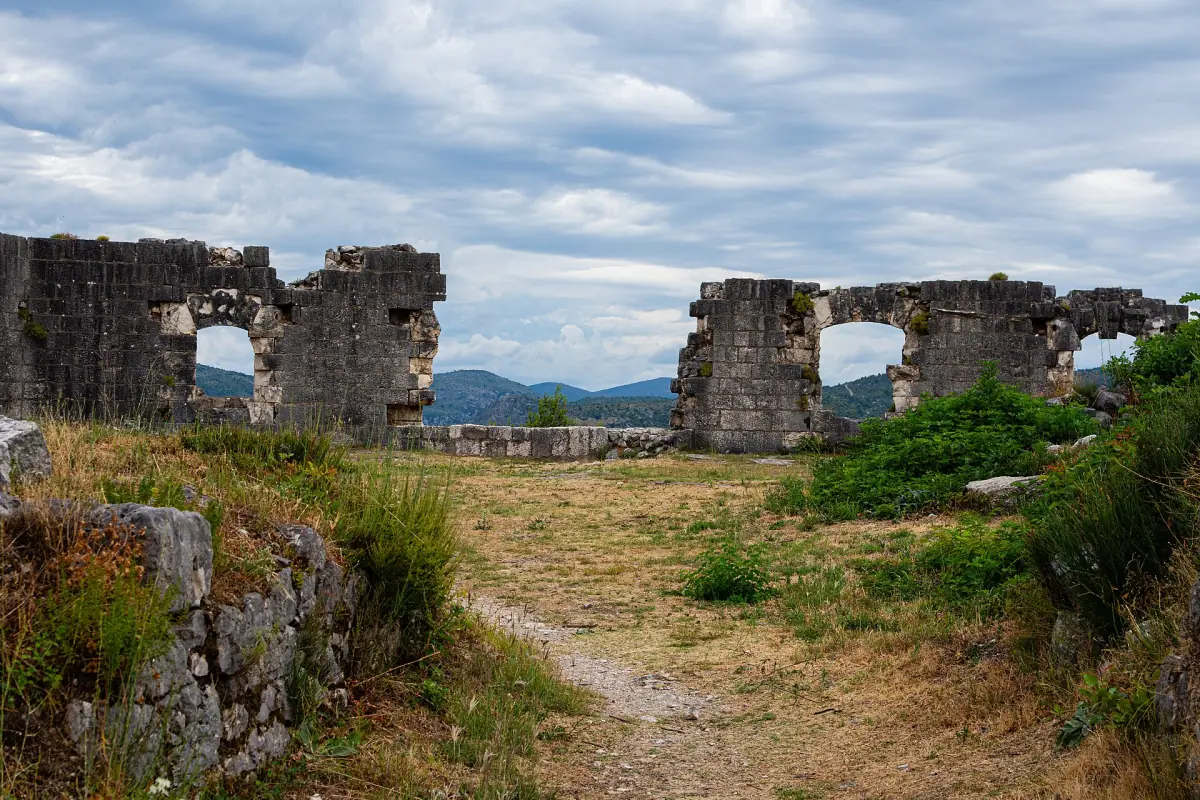
Vidoški grad
The fortress ruins rise above the town and are visible from the streets. Access to the grounds can vary, so ask locally before you climb, and stay on established paths.
Radimlja necropolis
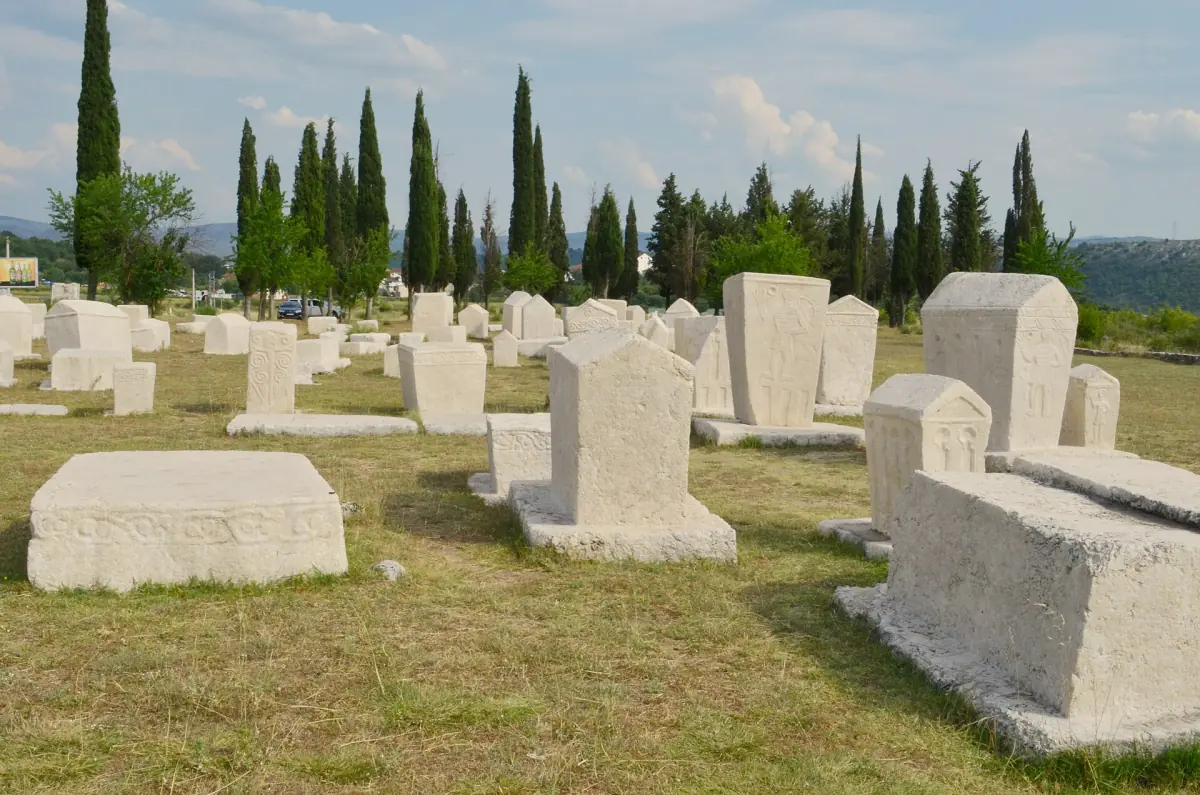
Radimlja is part of the UNESCO site and listed as component 1504-001. Its tombstones are the main reason to come, and the next section explains what they are.
Stolac tours and day trips
Day trips from Mostar and the coast that include Stolac or Radimlja, with live prices and availability.
Radimlja and the stećci
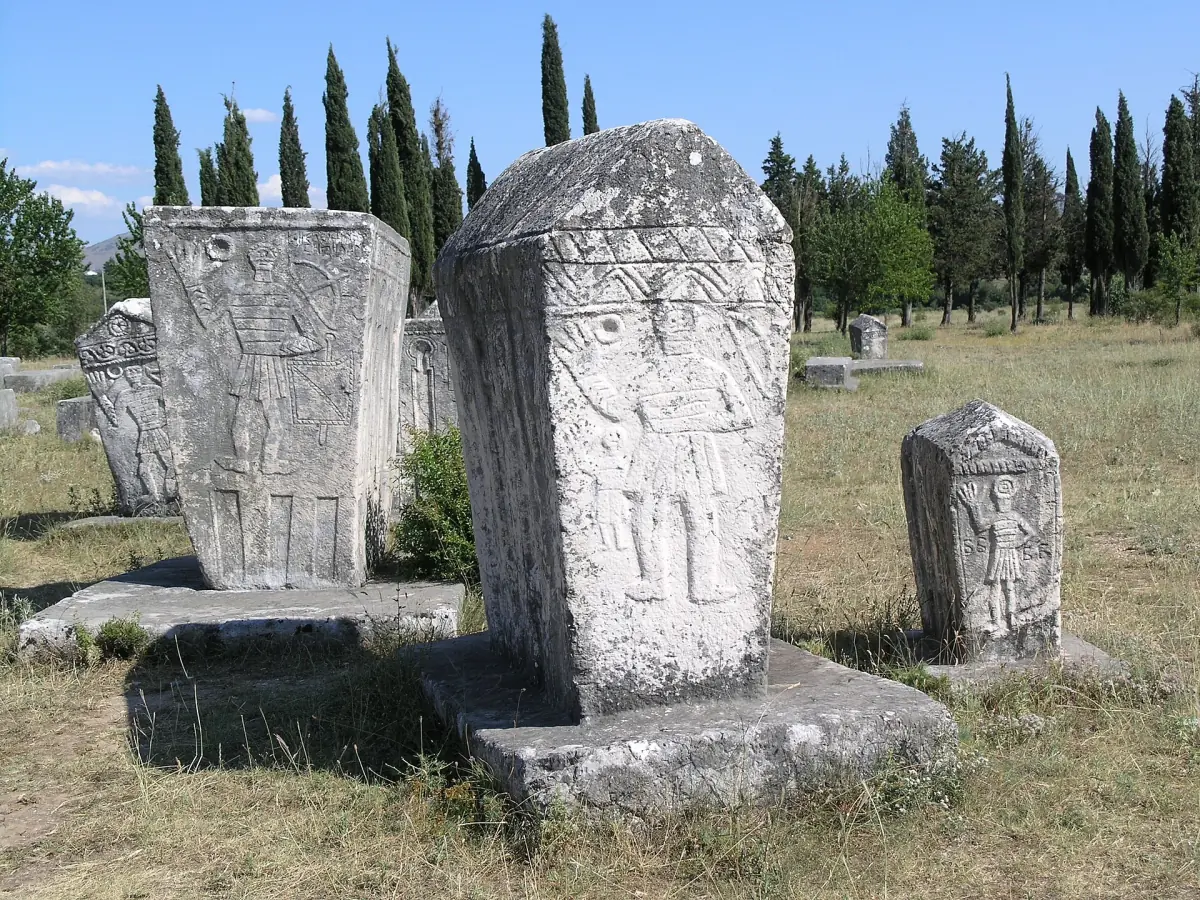
Stećci are medieval gravestones, carved from stone and often decorated. The UNESCO site called Stećci Medieval Tombstone Graveyards was inscribed in 2016. It covers 28 cemeteries in Bosnia and Herzegovina, Croatia, Montenegro and Serbia, dated from the 12th to the 16th century.
Radimlja is one of them. Two things follow from the way the listing is built. Not all stećci in the country are part of the UNESCO site, and the whole town of Stolac is not World Heritage either. The listing covers named graveyards, and Radimlja is one.
What the UNESCO listing covers
Useful to know before you tell anyone that Stolac is World Heritage.
| Part | In the UNESCO listing? | Detail |
|---|---|---|
| Radimlja necropolis | Yes | Component 1504-001 of the serial site |
| 28 named graveyards | Yes | In Bosnia and Herzegovina, Croatia, Montenegro and Serbia |
| Other stećci in the country | Not all | Only the named graveyards are covered |
| The town of Stolac | No | The town is not part of the listing |
| Vidoški grad | – | A local landmark above the town |
Visiting the necropolis
The necropolis is run by JU Radimlja, an institution of the town. Opening hours, the ticket price and parking should be checked before you travel, because they can change during the year. Do not assume that entry is free.
Treat the stones as the grave markers they are. Do not climb on them, lean on them or make rubbings, and keep to the paths. Photographs work best in low light, in the morning or late afternoon, when the carvings show more shadow.
How to spend half a day
An editorial suggestion, not a fixed program.
Start at Radimlja
The light is gentler in the morning, and the site is quieter. Walk the paths slowly and read the carvings from a distance.
Continue to the town
Walk along the Bregava, cross one of the bridges and look up at the fortress. Stop for a coffee and a rest.
Leave time for the road
Plan the drive back so that you are not on unfamiliar roads after dark, especially in autumn and winter.
Planning your trip
Stolac suits a half-day stop on a longer route through Herzegovina. Combine it with Mostar and its Old Bridge, Blagaj and Počitelj, which all lie in the same part of the region. Check the current timetable if you plan to use a bus, and expect to rely on a car or a tour for the necropolis.
- Weather: summer is hot. The average August daily high in nearby Mostar is 33.5 °C (about 92 °F), and the average July rainfall is only 55.9 mm. Spring and autumn are milder, but rain increases from September (137.2 mm in Mostar on average).
- Safety: official travel advice asks visitors in Bosnia and Herzegovina to stay on roads and established paths, and not to enter ruins or fallow fields. That applies to the fortress area as much as to hiking.
- Money: bring small change in convertible marks (KM). The central bank rate on 21 October 2026 was 1 euro = 1.95583 KM.
More practical details are on the pages for travel tips, weather and where to stay.
Nearby on the same route
Other stops that fit in the same region.
Stolac and Radimlja: frequently asked questions
What are stećci?
Stećci are medieval gravestones. The UNESCO site Stećci Medieval Tombstone Graveyards covers 28 cemeteries in four countries, dated from the 12th to the 16th century.
Is the whole town of Stolac a World Heritage Site?
No. The listing covers named graveyards, and Radimlja is one of them. Not all stećci in the country are part of it either.
Does it cost money to enter Radimlja?
Ticket prices and hours are set by the institution that runs the site and can change, so check before you travel. Do not assume that entry is free.
What is Vidoški grad?
It is the fortress that stands above Stolac. Access to its grounds can vary, so ask locally and stay on established paths.
Can I visit Stolac and Radimlja in one day with Mostar?
Yes, as a day trip with a car or a tour. Check opening times on the day.